The theme of this week’s session was “Seeing”. We were asked:
Q. What do you see where you are now?
- I’m at the dining room table which has become my work area. The table is very messy whilst the room around me is neat and tidy.
Q. What does it mean?
- I feel uncomfortable about the mess. It distracts me. If it was tidier I think I would be able to be more free and easy to think and create.
We talked about John Ruskin. He was well known for exploring the details of the world around him. He would look in minute detail at such things like moss. He was famous for loving Venice. He would crawl and climb around Venice to draw it.
JMW Turner was looked down upon by his contemporaries in his time but Ruskin celebrated him.

Ruskin:


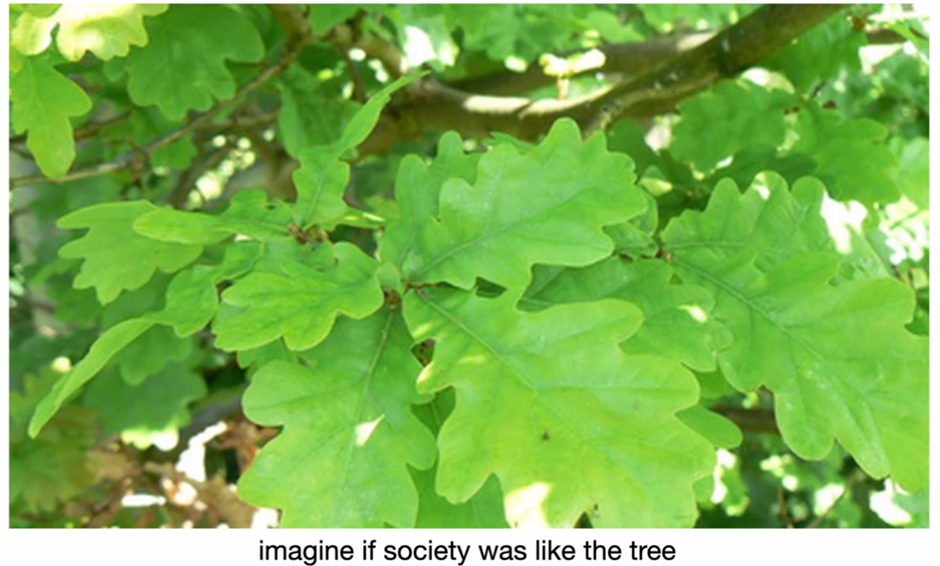
In the above image you can see the tree, but there is so much more to see of the tree that we can’t see. Eg the roots under the trees. The leaves shape and move so that every leaf can get light.
We were introduced to Iain McGilchrist who is a neuroscientist, scholar, and author. He wrote “The Master and his Emissary.”
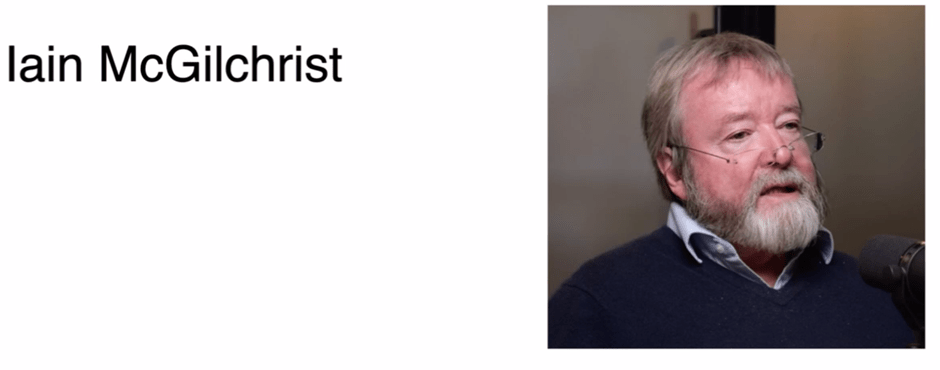
We watched a video of Iain McGilchrist where he talks about:
Two hemispheres of our brain pay attention to the world in different ways. How our world comes into being for us. What we attend to and how we attend to the world changes who we are and what we find in the world. Attention is a moral act. If you don’t pay attention to detail you don’t understand the world as well as you should/might. It changes who you are as a person. Left hemisphere is to get stuff that we need – power, utility, etc. Right hemisphere is beauty, goodness, and truth. Values that we’ve lost sight of. Artists judge works by how powerful they is. But it’s wiser not to think you know everything. To still have wonder and attention to what is happening around us.
We watched a video about Lubaina Himid who has a studio in St Ives Cornwall. Her early experiences related to water. She said that she made 100 works on paper to learn what the sun, sand, and water do. So she can talk about the politics of the transatlantic slave trade.
As an African artist, she feels it’s important to have a conversation across our shared experience. Her work commemorates the “aunties”, the women in her life. How love, family is important. Trying to paint moments of doing one thing but thinking and feeling things that no one else can see.

I really like the above quote. Quite often in life we portray ourselves as one thing but we are thinking and feeling things inside that are quite different.
We discussed further the importance of “seeing”. We watched a video of basketball players passing balls around where a moonwalking bear walks through the middle. If you only concentrate on where the balls are, then you completely miss seeing the bear. This highlights the point that there is so much more to see than what you first notice. By looking again, and again then you see more and more.
We were broken into groups and each given a photo to analyse. We needed to answer the following questions:

Here was our photo:
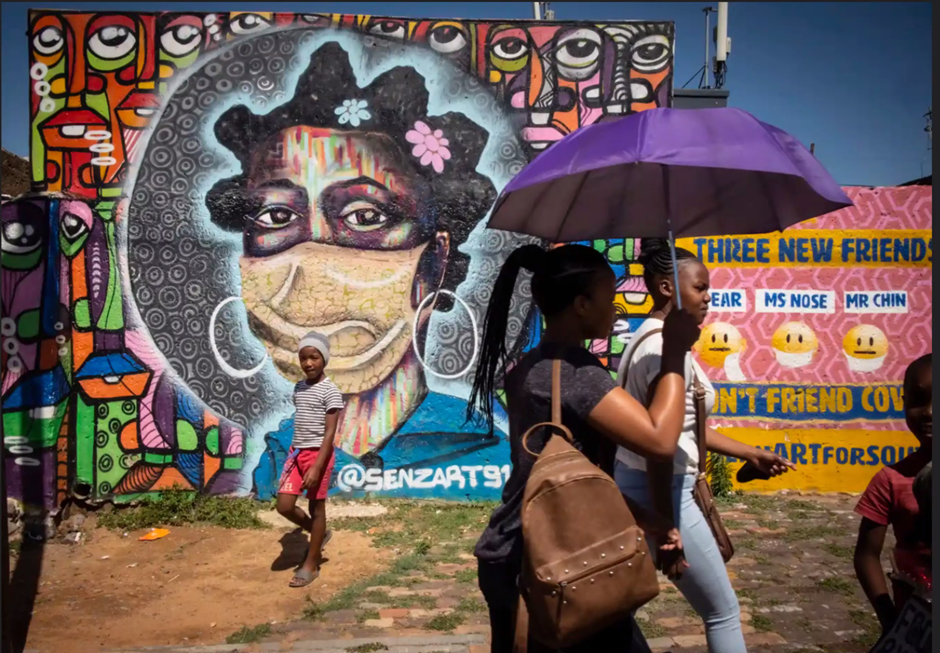
Our observations:
- Covid street art in the background. No one in front has masks on. So this photo could have been taken after Covid era was done
- Two women walking together with an umbrella. We assume it’s a hot country. Although the boy in the background has a woolly hat on.
- Seems like a public path
- Billboard on the right about how to wear a mask.
- Street art in the background. Looks as though it’s been painted on the wall rather than a poster.
- Graffiti style @senzart91
- So many colours, so interesting. The colours get people’s attention
- Main person in the back image could be a regular person but could be someone of more significance. Could be someone medical.
- Found details about the artist @senzaart911
- He posted an image of this mural in 2022.
- Is there a commentary about the murals in background advising to wear masks, but no one is wearing a mask
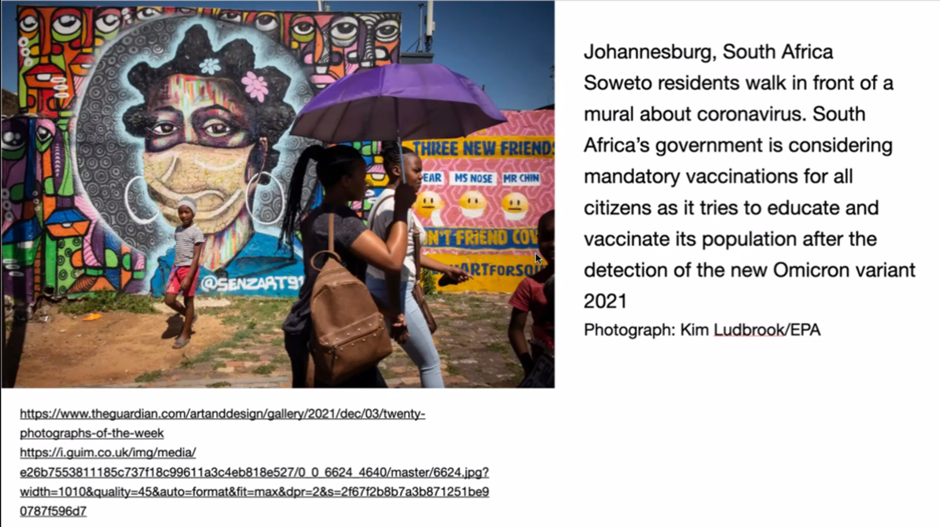
This was the resulting information about our photo, so we weren’t far off:
Other images:
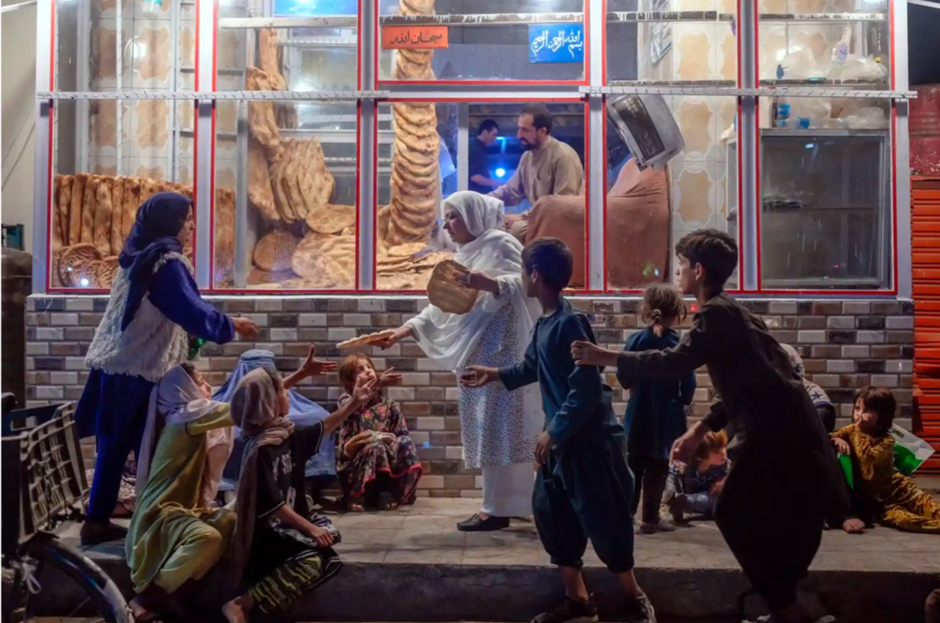
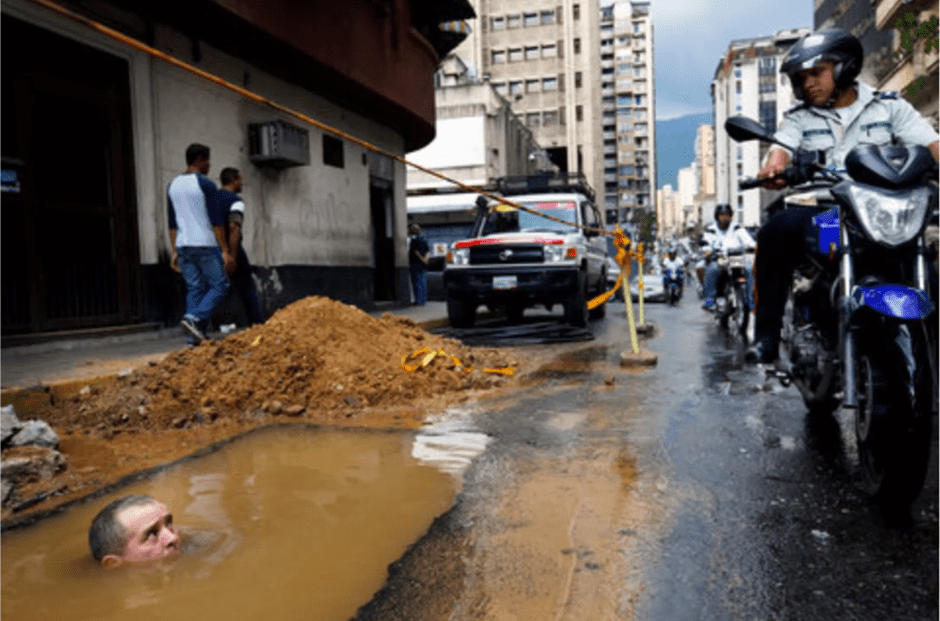
It was really interesting how in-depth every group got into analysing their photos. It is true that the more you look, the more you see.
Towards the end we broke into “Accountability threes.” In my group were Rachel and Zoe. We had a good chat about how things were going, particularly in regard to the Study Statement. It was useful to review and check in with each other.
Jonathan finished the sessions with “Ruskin’s blessing”:
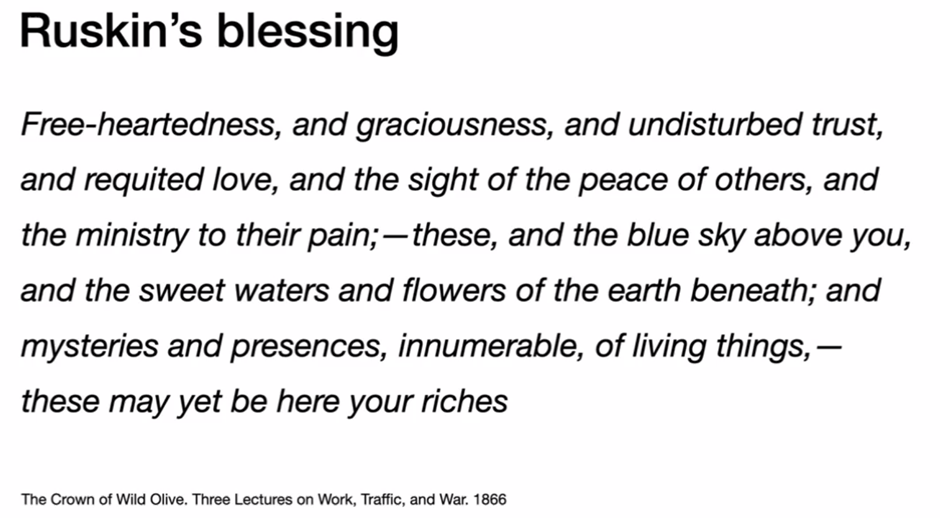
Something for us to go away and think about, in terms of seeing and experiencing the world around us:
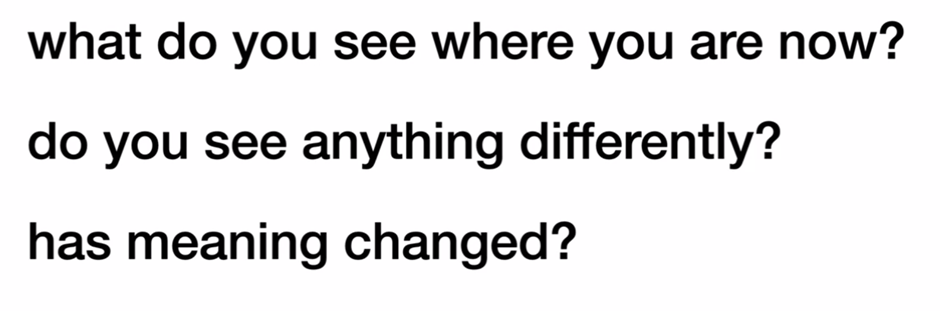
Having thought further about this, I think that I will see things differently. There are some fascinating photos in news reporting. I love looking at the “News in Pictures” in the Times online. I will certainly be looking more closely at what is going on in the background as often that is where the most interest lies.
 Sophie Ashdown
Leave a comment