Every Wednesday morning I go for a walk along the Thames with my neighbour. We usually take the exact same route every week with occasional detours at high tide. Having walked this route so regularly for the past six years, I stopped noticing much along the way. This is probably because we are chatting the entire time. Somehow we never run out of things to talk about!
This week I decided to combine the walk with some pattern spotting, expecting to find an equal amount of patterns in nature and man-made form, but for some reason there were not any notable patterns in nature. Or perhaps there were but we were too busy chatting at the time.
Interestingly when I looked back at the photos, I realised that many are related to iron or metal work in some way. It wasn’t intentional but these were the things that caught my eye.
I’m increasingly surprised by the intriguing designs on… manhole covers?!? What do we call them? I think that term is probably non-PC now. Are they person-hole covers?
I did a bit of research and apparently the appropriate term is now “Steel Access Covers.” This research led me to find that there are other people who notice and appreciate the designs on such things. This site celebrates examples from across the world. There are some surprisingly complex designs for such ubiquitous objects, and I doubt that most people notice them.

Someone really took some time designing this one I think as the pattern is not completely uniform and is adjusted around the text. I suspect this was made a long time ago and I wonder just how it was done. Hmm perhaps I could have done my research paper on these unusual sources of artwork!
Back to the walk…
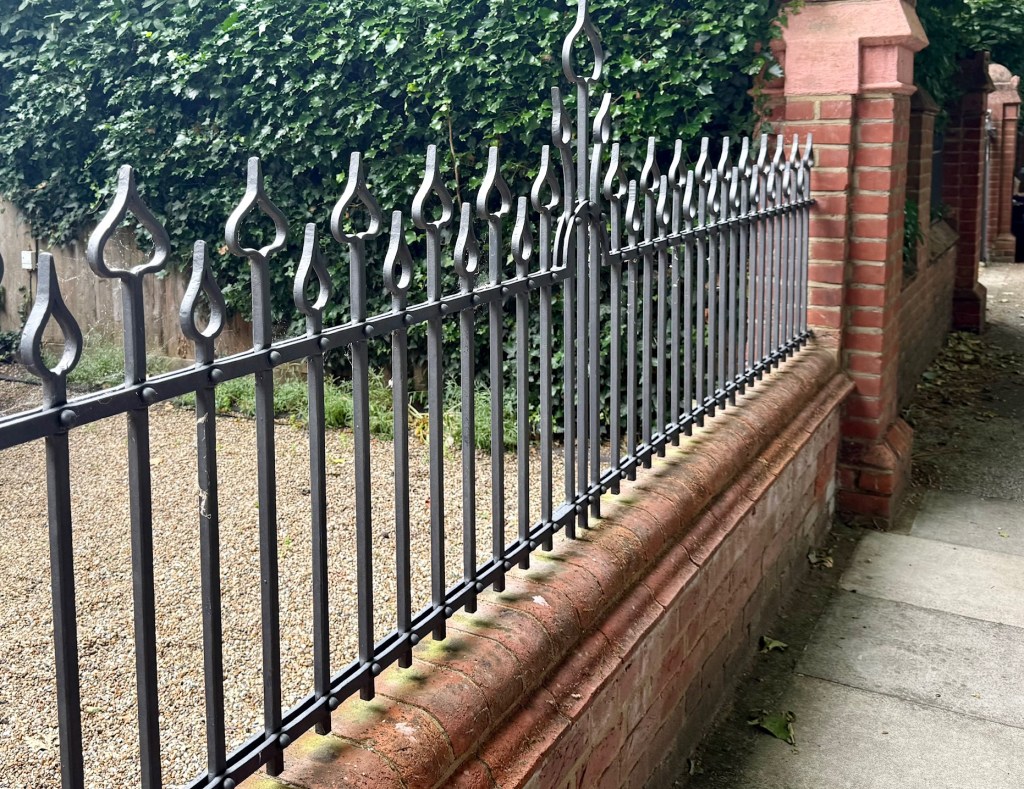
This must have been a hand-made fence by someone who knows what they’re doing. I like the symmetry and the centre feature section.
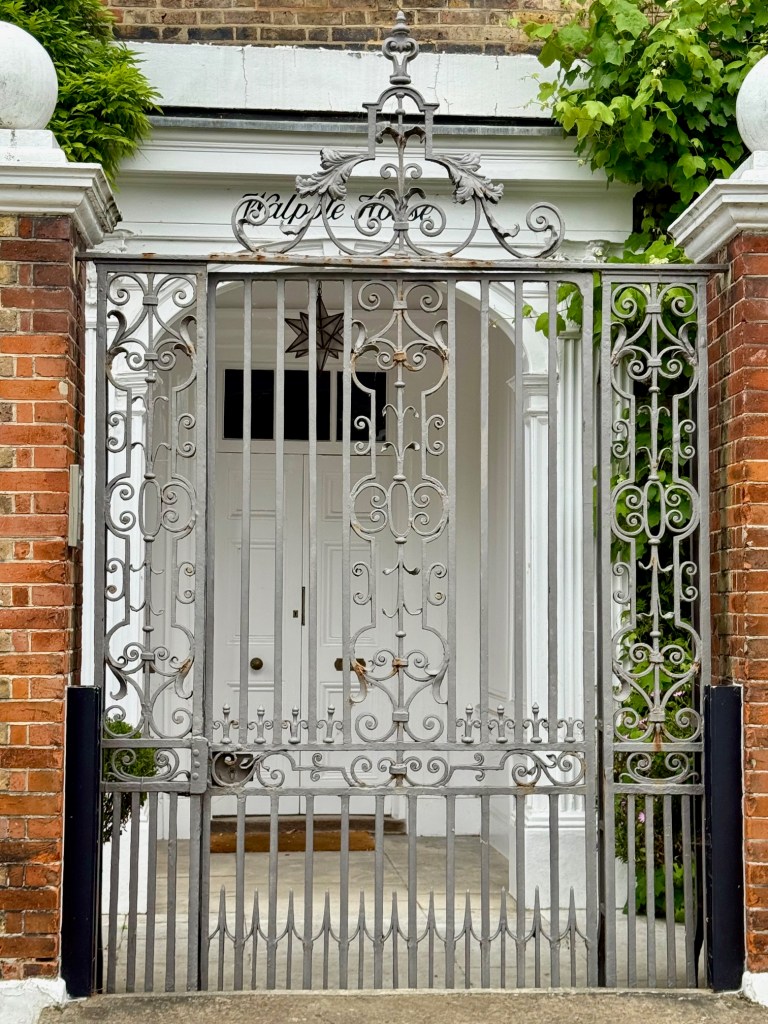
Another ironwork example, this gate is large and elaborate. It’s not really a style that I like, but I appreciate the craftsmanship and the symmetry.
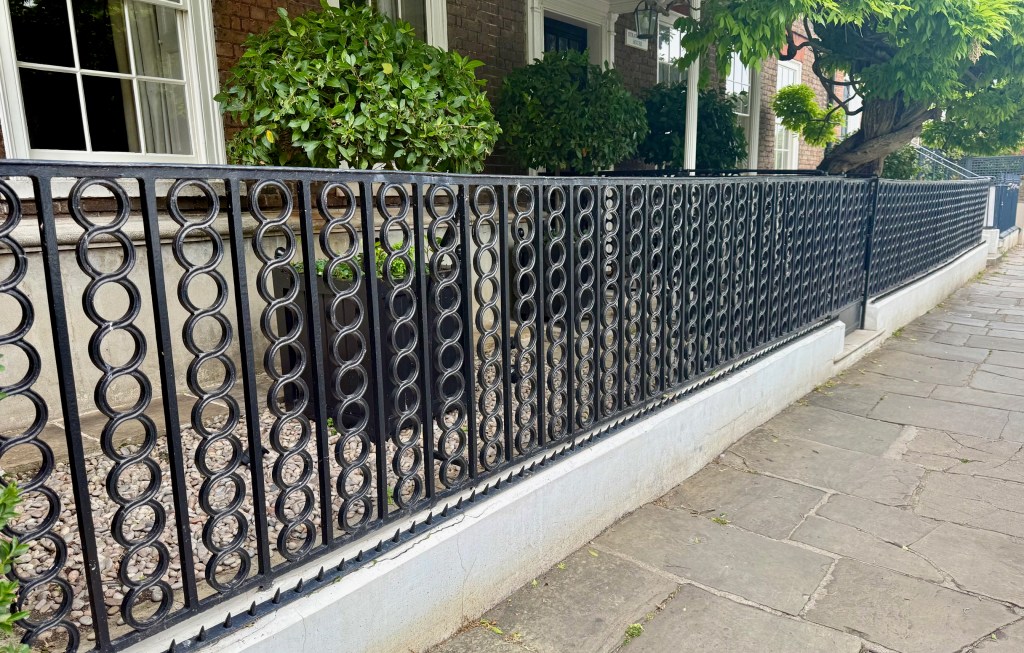
This is much more my kind of thing! Black, modern, circles, lines, symmetry, order, and repetition.
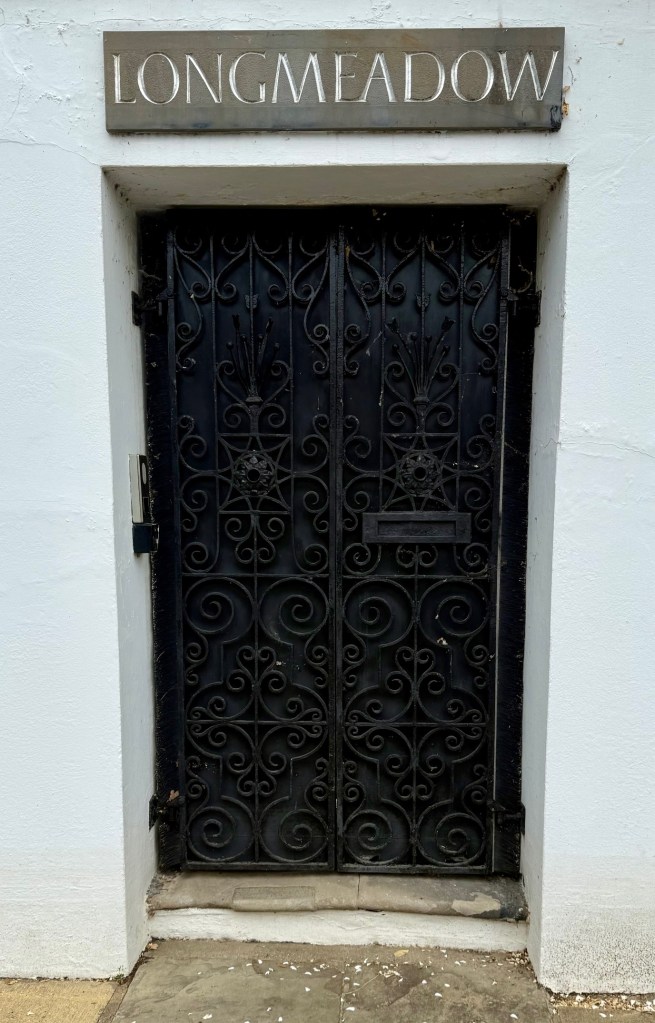
Unfortunately it is a bit hard to see this ironwork door but there is a lot going on there. The maker must have loved bending that iron into circular shapes. It’s a shame that the letterbox affects the symmetry but still I can appreciate how much work it must have taken.
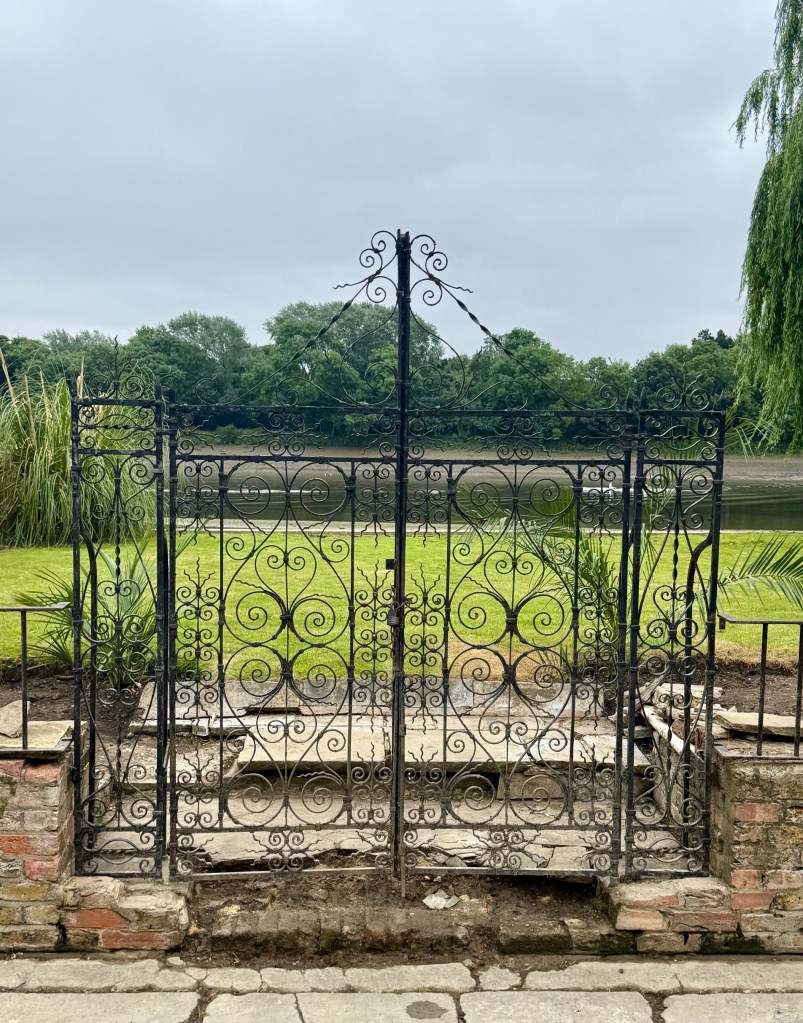
This appears to be the only photo that proves that I was actually walking along the Thames, but it was almost entirely on roads rather than directly by the water. Some of the houses face the river, but have a road in front of the house. They then have another patch of land on the other side of the road next to the water that is like their front yard. Most have gates of some kind to keep them private. This gate seems somewhat spindly to me, and lacks the heavyweight oomph of some of the others we’ve seen.
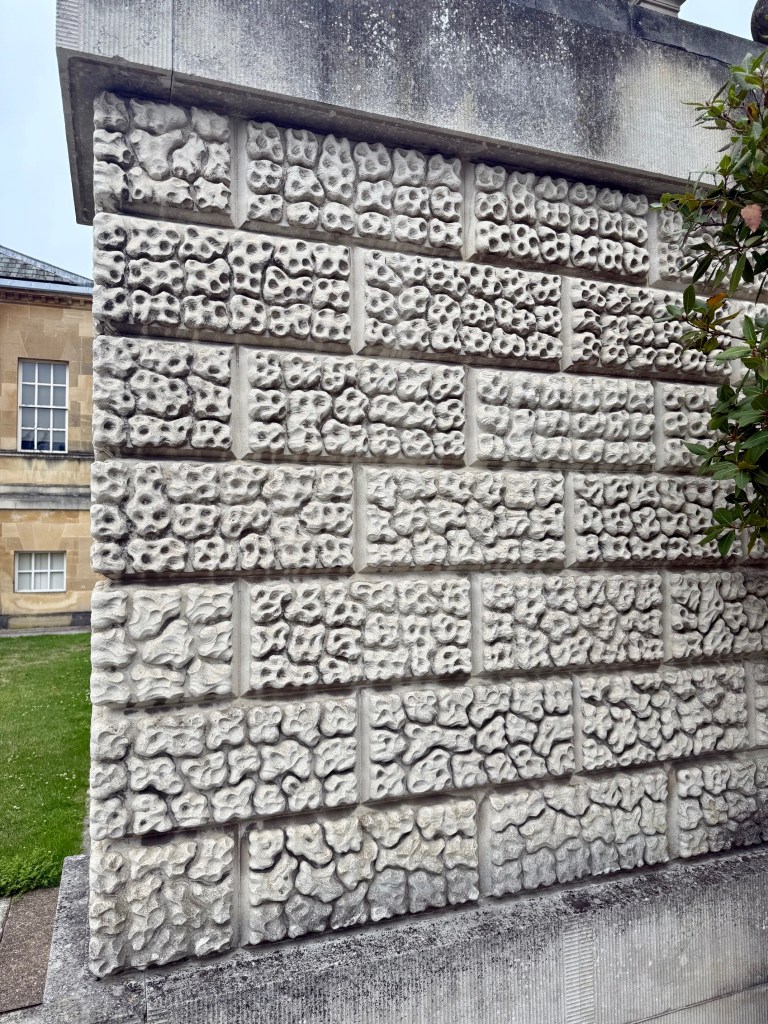
This is a stone wall and I struggle to understand how (or why) it was made in this way. Each large “brick” seems to have its own pattern, but why are the lower ones less detailed than the higher ones? Have they been worn away somehow. This wall is quite far from the river so wouldn’t not be affected by high tides but maybe it is years of people and dogs going past.
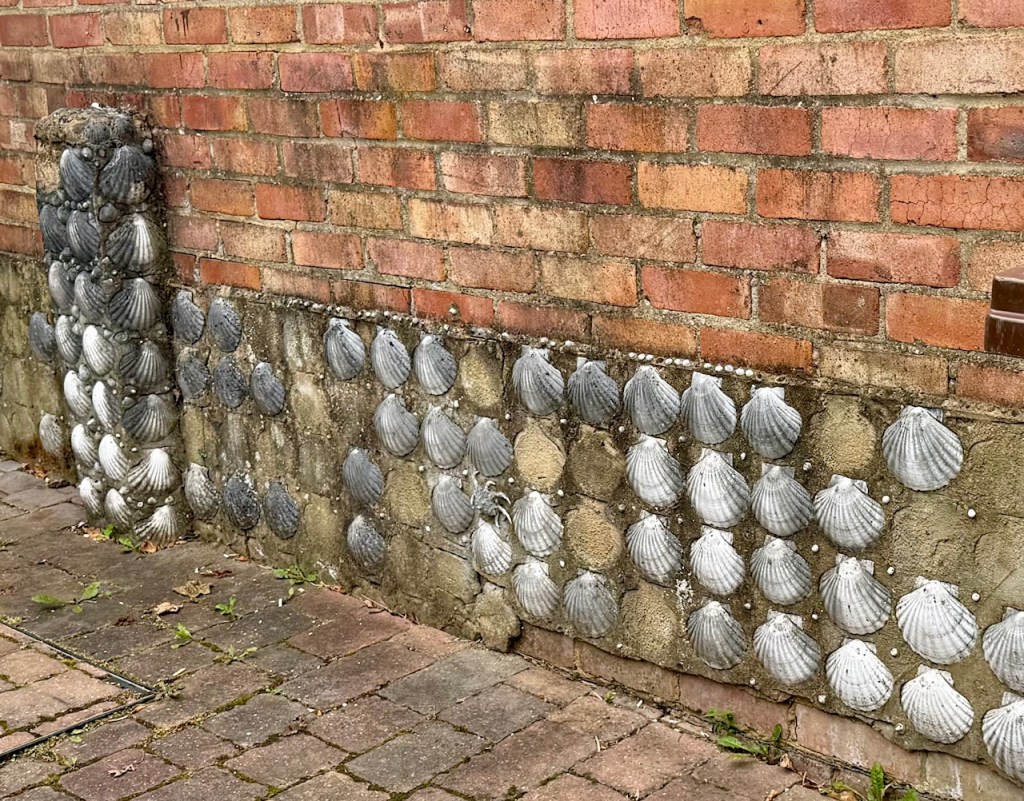
This is not exactly a pattern but I’ve walked by this wall so many times that I had to include it. It is part of someone’s driveway and is in a definite state of disrepair. I can only guess that someone created it decades ago and subsequent owners of the home have just let it go. If all of the shells were in place, it might make an attractive pattern but in its current state I don’t think it is doing the house any favours!
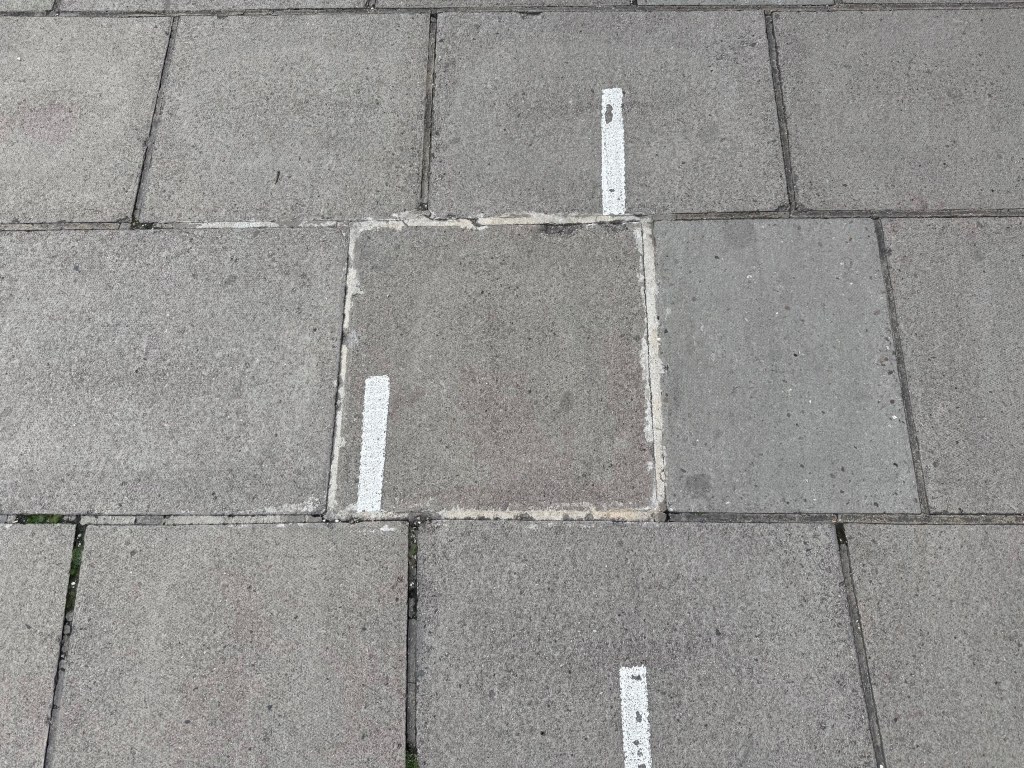
And I had to include this one. Clearly the slab had been removed and replaced at some point, but I mean seriously, couldn’t they put it back the right way?!? Does my head in every time I walk over it! 😀
 Sophie Ashdown
Leave a comment