My Study Statement is titled “Form over Function: Why and how have the visual and design principles of the original Constructivist movement endured to influence 20th century modern art in Britain and new Constructivism in the UK.”
In my blogs I refer to Constructivism quite often and showcase some of my work that reflects this style.
For this Unit 1 Assessment I have provided links to the blog posts that most demonstrate each of the Learning Outcomes, but I found that often the blogs would be answering more than one objective. For simplicity I have only linked to a blog once in this summary, but there is content there that could be considered for other objectives also.
I am still on a journey with this course and my art practice. It is in the next few weeks and months that I expect my art practice to more fully embrace the aims of my Study Statement and to implement the work plan that I have set out.
Learning Outcome 1:
Formulate, describe and implement a challenging and self-directed programme of study, relating to your Study Statement.
Since the start of this MA course, I knew that I wanted to do something that would revolve around Constructivism in some way, and it took some time over the first weeks to consider how I would do this and what I would need to do in my practice to make it happen. I took some significant time to consider my approach and how I could formulate my art practice to reflect this. I discussed it at the Tuesday sessions, I did research online, I read books and articles, and took inspiration from the course to start planning out how I would implement my new way of working.
Evidence in blogs:
Since week five I have been thinking about how I would target my Study Statement, with a focus on Constructivism. I knew at that time that I need to do more consideration and exploration of how I could structure my practice around Constructivism: https://sophieashdown.blog/2024/10/29/week-five-the-lion-and-the-unicorn-and-the-study-statement/
In my first tutorial with Jonathan we explored a great deal about what my art practice looked like to me. How did I see the path ahead and the opportunities around me. I expressed some doubt about where I was going with my art at the time. We talked about patterns and how they exist in my head and how they translate into my art practice. It was refreshing to talk openly and abstractly about what I was thinking and feeling. That conversation really started leading me towards what my Study Statement became. https://sophieashdown.blog/2024/11/01/30-oct-2024-first-tutorial-big-open-white-space/
In week nine we were tasked with coming up with a example of Inspiration, and I selected a review of an exhibition of pieces by Constructivism founding artists Alexander Rodchenko and Liubov Popova. This relates directly to the main focus of my Study Statement. In this blog post I discuss how I found the review inspiring and thought-provoking for my art practice: https://sophieashdown.blog/2024/11/26/week-nine-inspiration/
In January I went into the CSM building for the first time to do some research in the library and work on some art ideas I had going. I worked on a new piece in a constructivist style that would work as part of the aims of my Study Statement: https://sophieashdown.blog/2025/01/20/first-visit-to-csm-campus/
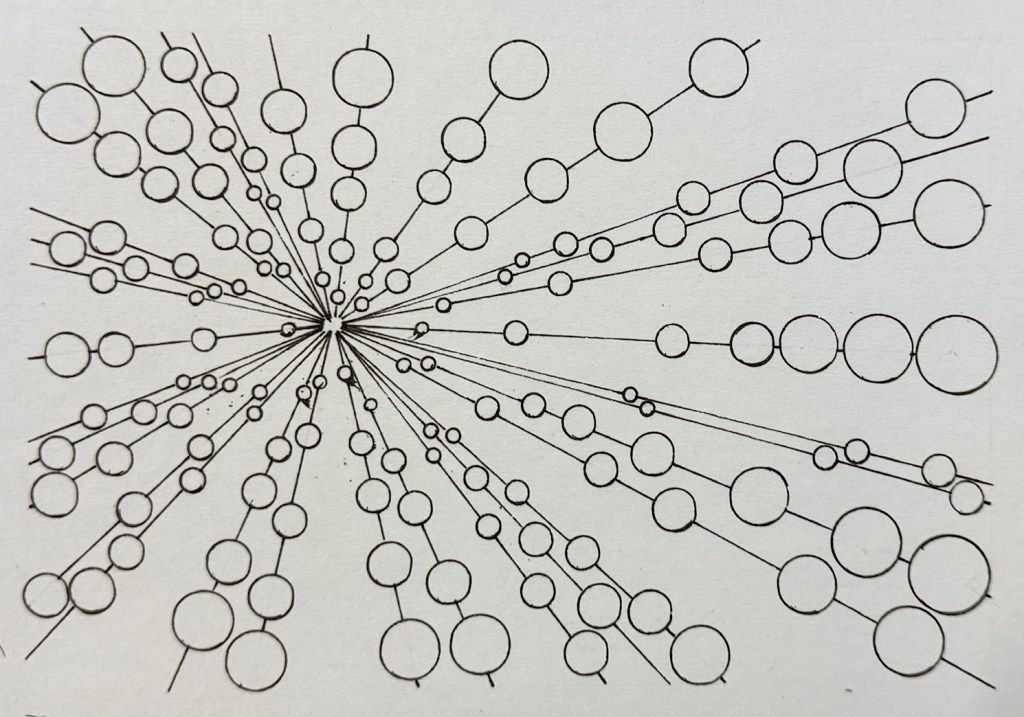
In my second tutorial with Jonathan in January, we spoke at length about my plans for the Study Statement. We talked about the origins of Constructivism and what really interests me about it. Through this I realised that it is the visual design style of the art movement that I am more interested in than the original social/political messaging, and I understood that it’s okay to focus on the design rather than the messaging. This was a key pivot point in my planning for the Study Statement. https://sophieashdown.blog/2025/01/31/second-tutorial-31-jan-2025/
Learning Outcome 2:
Implement appropriate working methods for building an independent and effective self-organisation that enables the critical engagement with practice-based research.
I understand now that initially in the course I had a lot more to learn than I realised. Not just about what I wanted to create, but how and why I wanted to create it. What are my reasons, influences, motivations? How can I explore myself and my work to set in place an art practice that drives me forward? We have explored many of these questions during the Tuesday sessions, although I didn’t always know it at the time. I’m glad now that I have blogged about the Tuesday sessions because it is helpful for me to look back and understand better what I learned and how I have incorporated it into my practice based research.
It was when I researched and prepared for my Study Statement that the plan really took shape of how I would work Constructivism into my art practice going forward. I considered both the research requirements and the practical work required to explore and expand my art practice.
Evidence in blogs:
Very early in the course, I was inspired by Jonathan saying in one of our first Tuesday sessions to challenge ourselves to do something different, something out of the norm from our usual art practice. At that time I was making large colourful abstract paintings with intricate patterns. I evaluated what would a much different medium and subject matter to work on, and came up with doing a small (A4) figurative ink drawing of a friend’s cottage. It was quite a challenge for me but it really expanded my mind in terms of what I could create, and most importantly how I was creating it. I had got so used to painting that I hadn’t tried ink drawing for years. This exercise wakened me to how much I enjoyed the process of ink drawing, which then later changed the direction of my art practice as it is now. https://sophieashdown.blog/2024/10/07/against-the-norm/

I followed up my first post about the cottage drawing with an additional blog to update on my progress. In this blog I took the time to consider what I had learned during this process. A key point was that I was not as bad at figurative drawing than I thought and that stepping out of my comfort zone was enjoyable. https://sophieashdown.blog/2024/10/21/update-on-the-cottage-drawing/
In week four of the course, at one of our Tuesday sessions we were asked to consider how we are getting on in the course. Specifically answering these questions:
- What have you sone so far?
- What have you discovered so far?
- What will you change because of what you have discovered?
- What will you do next?
I find it very interesting looking back at my answers then, because I now realise how much I had already learned and experienced in those first four weeks. Already I was really looking at how I was doing things and what I could do better. I was experimenting with new ideas and new methods, and really enjoying the process. I can see how inspired I was then, which has continued through to now. https://sophieashdown.blog/2024/10/22/week-four-practice-based-research-and-embracing-failure/
Thinking about the interim show and how I could use that platform as an opportunity to showcase my Constructivist-inspired art practice, I came up with the idea of having a “pattern of patterns”. I reviewed this with Jonathan in my second tutorial which sparked some interesting conversation about how the overall piece could be put together and hung in the space. This was very inspiring to me for encouraging more output of work, since the idea I have in mind could be in different size and forms depending on how many individual pieces I prepare. https://sophieashdown.blog/2025/01/31/second-tutorial-31-jan-2025/
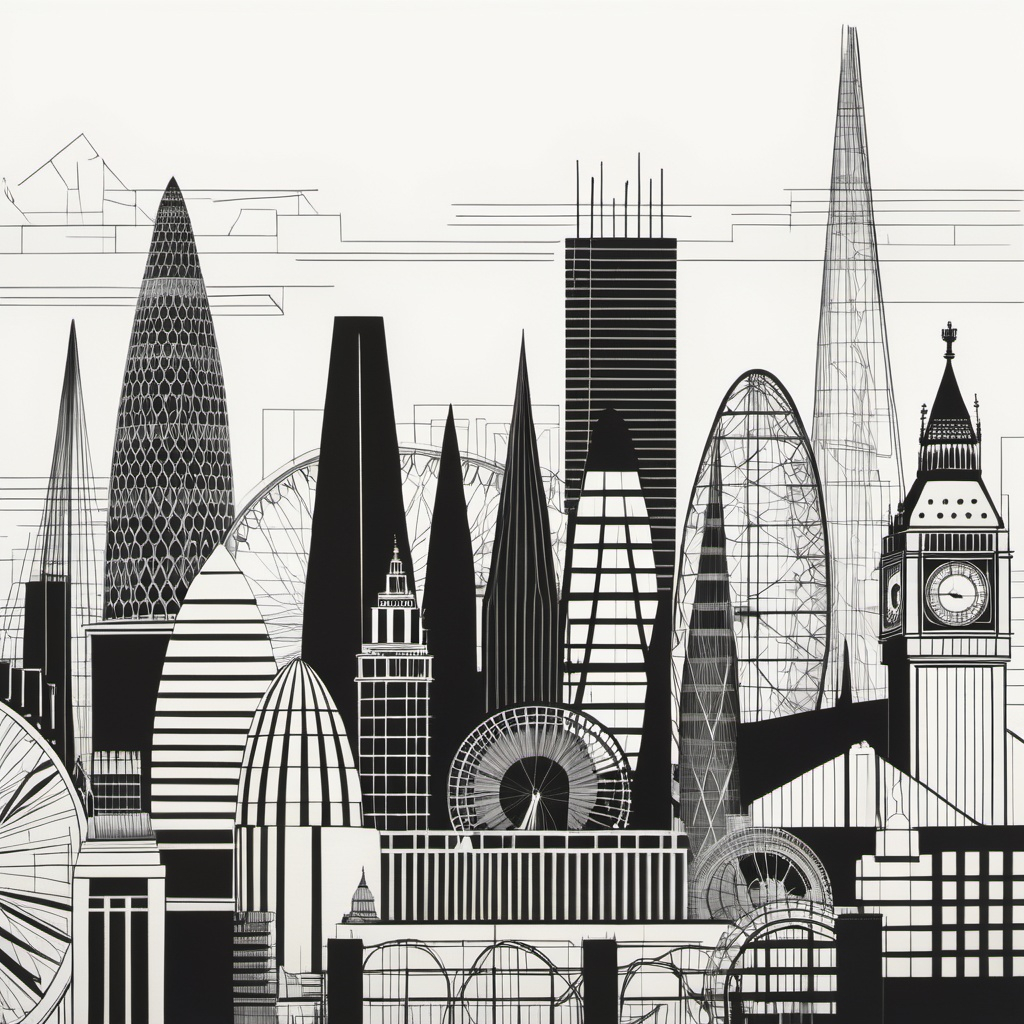
As part of my research into different avenues with constructivism, I tried using AI to compare different outcomes of the same prompt across three different AI image sites. I then analysed and compared these to find the one that was most appropriate to recreate as an experiment: https://sophieashdown.blog/2024/12/31/ai-image-exploration/
At a recent Tuesday session about open ended questions, I found the process useful when applied to an art practice. In groups we asked these questions of each other and the process really delved into deeper thoughts and intentions for everyone. I was able to talk about, evaluate, consider, and conclude my thoughts on my art practice and the direction I have planned with my study statement. In my summary I question if I’m heading in the right path for my art practice and say this “I suppose [it] comes down to the question of who I’m making the art for, and that should really be myself.” Jonathan has said that our Study Statement is for ourselves, that our art should be created for ourselves and be about what we want to say. Clearly that must be sinking in since I came to that conclusion in this blog. https://sophieashdown.blog/2025/02/11/week-15-11-feb-2025-open-ended-questions/
Learning Outcome 3:
Communicate a critical understanding of your developing practice.
I try to take a pragmatic view of my work and how I learn along the way with my art practice. Sometimes I am proud of my work but feel shy to express that, and often I’m unsure about my work but seem to have no problem describing why. Looking back through my blogs, I have described quite a few pieces that I’ve made and been honest about the process and result. I realise now that this is all part of the learning process.
To stand back and look objectively at my work is becoming more natural to me and I’m increasingly recognising the merits of the process even if the result does not always turn out as expected.
Evidence in blogs:
We had a surprise “group crit” in one of our Tuesday sessions in November. This was my first experience of true critique of my work and offering my input to other artists in a structured way. This gave me the opportunity to think more analytically and conceptually which I found to be a good learning experience. https://sophieashdown.blog/2024/11/05/week-six-group-crit/
In October I was lucky to go on holiday but I still took my laptop and sketchbooks with me. I had some time while there to sit and consider what opportunities there are for me with my art practice. What could I try? What could I do differently? I decided to do some figurative sketching while there. I enjoyed the process and it was useful to explore new subject matter and techniques. However it also helped solidify to me who I am as an artist. I say in this blog “I know in my heart that purely figurative painting is not my calling. I enjoy stretching myself to do new things, but the abstract form is where I feel most drawn to.” I needed to do the exploration of figurative work to confirm to myself that I’m doing the right thing for me to create abstract pieces. It’s where I feel happy and inspired most. https://sophieashdown.blog/2024/10/29/no-rest-for-the-wicked/
In November I participated in an Art and Design exhibition which was not overly successful for sales, but was still a good learning experience. I took a few pieces that I had made during the course, which were very different from the usual pieces I had made previously. Interestingly it was one of the new pieces that sold first. In this blog I give an honest account of how I found the show, and about the new pieces. https://sophieashdown.blog/2024/11/25/w4-art-and-design-show-many-people-does-not-translate-into-many-sales/
I started developing new artworks with patterns that align with some of the visual aesthetic of Constructivism, particularly with straight lines, solid shapes, and geometric patterns. I talk about how I considered and created a new series of artwork. Here are three of the first pieces in ink I showcased on the blog: https://sophieashdown.blog/2024/11/23/new-patterns/

When I found out about the 30/30 challenge on Artquest where we make a new piece of art every day for 30 days, I knew that this would be a great challenge for me and also would hopefully result in many new pieces that I could use as part of my larger piece for the interim show. At this point I am 24 days into the challenge, and whilst not all of the resulting pieces are ones I will use for the show, I have learned a great deal about what I want to create, what I enjoy creating, and how best to create those with ink drawing. I want to maintain the monochrome theme, and this has worked well for me so far across the challenge. I have blogged about many of the pieces for the 30/30 day challenge. These are the ones most relevant to constructivism in my art practice:
The Day 18 piece from the 30/30 challenge is the one that is most directly related to Constructivism. I used two example pieces from key members of the movement to use as inspiration, and created my own piece in the constructivist style:
Two things I would like specific feedback on:
What should I be doing more or better in my blogs?
What is missing or needs more work in my Study Statement?
 Sophie Ashdown